
Quick answer
California sea lions began hauling out on K-Dock at Pier 39 in September 1989 and never left. The Marine Mammal Center advised the marina to give the docks up rather than move them. Numbers swing with the fish and the season, peaking in winter — as many as 1,700 have been counted at once — and thinning in early summer when the males head south to breed.
Full transcript
The Squatters
In September 1989 a handful of California sea lions hauled themselves out of the water onto K-Dock, a floating platform on the west side of Pier 39, and went to sleep in the sun. You will hear that the Loma Prieta earthquake drove them here. It did not: the quake came a month later. Within weeks there were well over a hundred of them, and the boat owners whose slips they had taken were not amused. The marina staff called The Marine Mammal Center in Sausalito and asked how to get rid of them. The answer, after some study, was: don't. The sea lions had found herring, protection from great white sharks, and a dock nobody could take from them. The boats moved out. The sea lions stayed.
Why They Come and Go
If you visit and the docks are empty, you have not done anything wrong. The population swings wildly with the season and the fish. Numbers usually peak in winter, when several hundred can pile onto the platforms and the record count stands at about 1,700. In early summer, most of the males head south to the Channel Islands for the breeding season, and the docks can look almost abandoned. They are all males, by the way, or nearly all. The barking you hear is territorial argument, not conversation, and the piling on top of each other is deliberate: it conserves body heat.
The Rest of the Pier
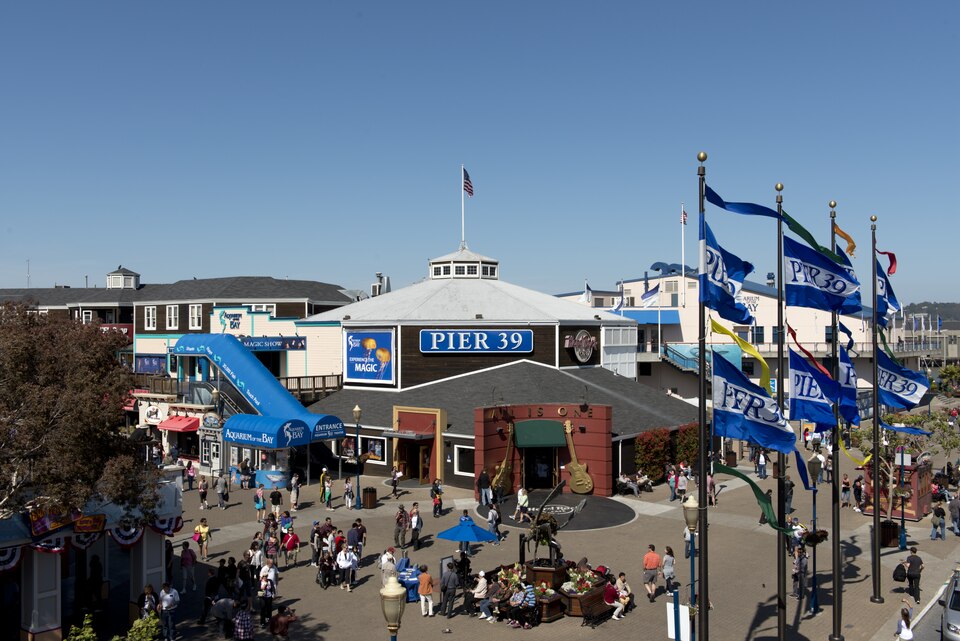
Pier 39 opened on the fourth of October, 1978, the work of a restaurateur named Warren Simmons, and it was built to look weathered from the first day. Two things here are worth your time beyond the sea lions. The two-storey carousel on the upper level is hand-painted with San Francisco scenes, and genuinely beautiful. And at the far end of the pier, past the shops, you get one of the best free views in the city: Alcatraz straight ahead, the Golden Gate to your left, the Bay Bridge to your right. Walk past the shops to the end of the pier; almost nobody does.


.jpg)
.jpg)


.jpg)

_boats_(July_2022)_-_2.jpg)

_July_2022.jpg)


.JPG)
.JPG)