
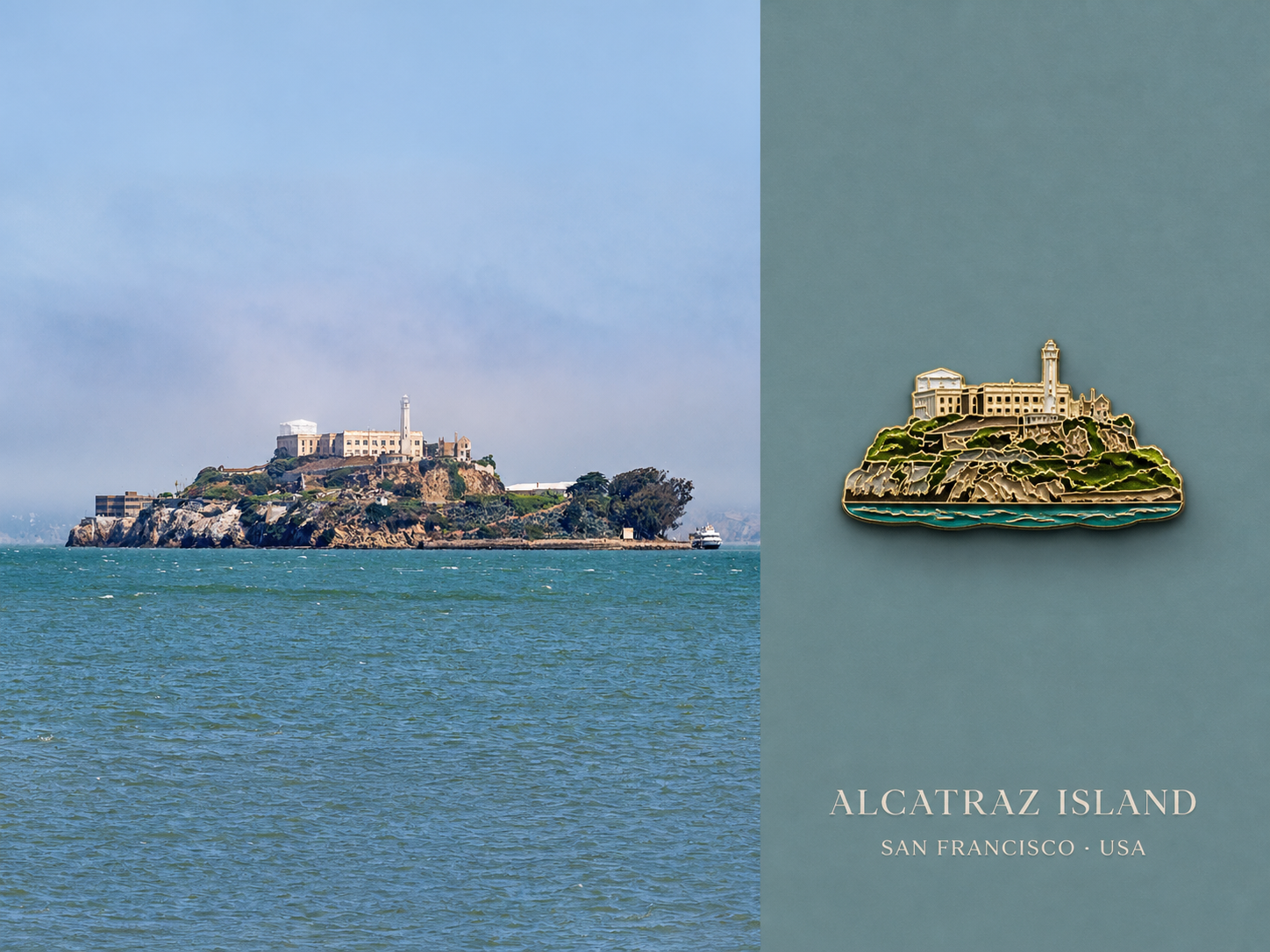
Quick answer
The short version of Alcatraz Island history: a federal penitentiary for 29 years, from 1934 to 1963, holding an average of about 260 to 275 inmates at a time in single cells. Thirty-six men made 14 escape attempts; three of them vanished in 1962 and were never found. After it closed, Native American activists occupied the island for 19 months.
Full transcript
A Mile and a Quarter of Cold Water
The Alcatraz Island history that matters starts with a distance: one and a quarter miles. That is how far this rock sits from the San Francisco shore, close enough that on a still night the men locked up here could hear the city — car horns, dance music, sometimes a voice carrying across the water. The Bureau of Prisons knew that. It was part of the punishment. The water around you runs between 50 and 55 degrees Fahrenheit, and the currents run hard through the Golden Gate twice a day. The prison never needed a wall on this side. Look back at the city skyline for a moment, then look down at the water, and you have the whole design of this place in one glance.
Twenty-nine Years, A Small Number of Men
The federal penitentiary ran for 29 years, from 1934 to 1963. It was built for the men other prisons could not hold, and the average population here was only about 260 to 275 inmates at once — a small number for a place this famous. Every one of them had his own cell, roughly 5 by 9 feet, and that was deliberate too: no cellmates meant no alliances. Al Capone arrived in 1934 and stayed four and a half years, some of it working in the laundry. Robert Stroud, the man the newspapers called the Birdman, spent 17 years here and was not allowed a single bird. Count the cells along the tier as you walk it, and you are counting the whole population of the island.
Fourteen Attempts
Across those 29 years, 36 men took part in 14 separate escape attempts. Twenty-three were caught. Six were shot and killed. Two drowned. And five were never found, three of them in a single morning in June 1962. In June 1962, Frank Morris and the brothers John and Clarence Anglin widened the air vents in their cells with sharpened spoons and a stolen drill motor, left papier-mache heads on their pillows to fool the night count, and paddled into the bay on a raft stitched from raincoats. No trace of them was ever recovered. The FBI closed the case in 1979 and concluded they drowned; the US Marshals Service still keeps the file open. Stand at the shoreline and pick the direction you would have swum — every visitor gets that wrong at least once.
Why It Closed
The prison did not close because it failed. It closed because it was expensive and falling apart. Salt spray had been eating the concrete for decades, and by 1961 engineers considered the prison a lost cause over the millions a rebuild would cost. Running a prison on an island meant everything arrived by boat, including fresh water — nearly one million gallons of it a week. The last 27 inmates were transferred out in March 1963. For six years the island sat empty, rusting, while Washington argued about what to do with a famous rock nobody wanted. Notice the rebar bleeding rust out of the walls beside you; that is the argument that closed this place.
Nineteen Months
In November 1969, a group calling itself Indians of All Tribes landed here and claimed the island under a treaty clause covering surplus federal land. They stayed 19 months. At its peak the occupation held several hundred people, with a school, a clinic and its own radio broadcast going out to the mainland. Federal marshals removed the last 15 occupiers in June 1971. By then the point had landed: the occupation pushed Native American rights onto front pages across the country and helped end the federal policy of terminating tribal recognition. Some of the painted slogans from those months are still on the buildings, kept there on purpose rather than scrubbed off. Find the water tower and read what is written on it.
What the Island Became
Alcatraz joined the new Golden Gate National Recreation Area in 1972 and opened to visitors the following year. More than one million people now come each year to a place built specifically to keep people away. The birds got it back too: gulls, cormorants and egrets nest across the island, and whole sections close in spring so they can breed undisturbed. That is the strange arithmetic of this rock — 29 years as a prison, 19 months as a protest, and half a century now as a park where the loudest thing is usually a bird. Watch which parts of the island are roped off today, and you will know what season the gulls think it is.